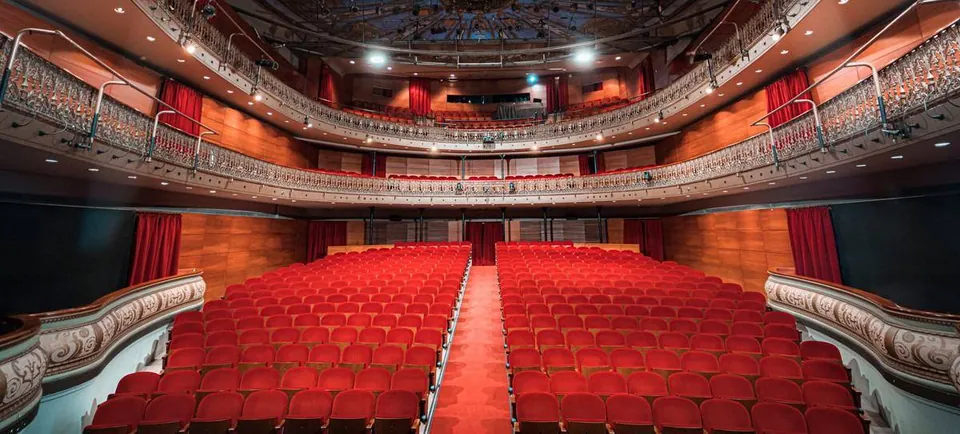
Point of focus
Design starts by choosing a point on stage that everyone must see, usually at or near the stage edge and close to stage-floor level. The lower or nearer the point, the steeper the rake required.
The C-value
The C-value is the vertical distance between a viewer’s eye and the sightline passing over the eye of the person in front. Values of about 90–120 mm are common; higher values give better views but a steeper rake and taller building. Lower values can work with staggered seating.
Staggered seating
When each row is offset by half a seat from the row in front, viewers look between two heads rather than over one. This allows a shallower rake with acceptable views.
Variable rake
The ideal rake is not constant; it steepens with distance from the stage. Row heights are therefore calculated row by row, then rounded to buildable steps within safety limits.
Horizontal view and distance
Side seats need an acceptable angle to the centre of the stage, and maximum distance depends on the performance: around 20 m for drama, more for large musical productions.
Key takeaways
- Fix the point of focus first.
- A C-value of about 90–120 mm.
- The rake steepens with distance.
- Staggered seating reduces the required rake.
This article is for general education; final design decisions are based on each project’s study and the competent authorities’ requirements.