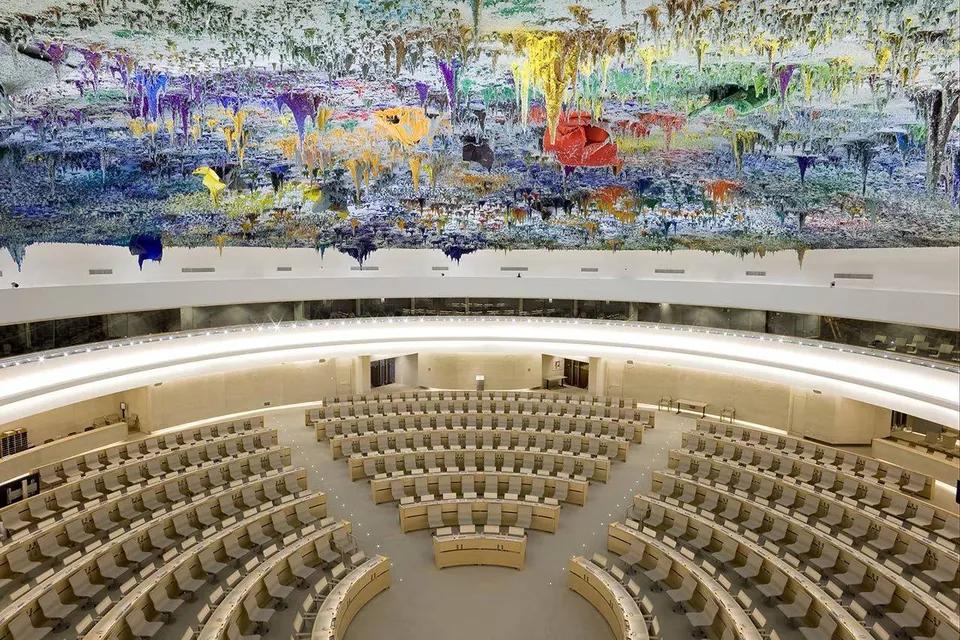
Seating format drives everything
Theatre style suits presentations and lectures, U-shape suits discussion with visuals, a large round table suits formal meetings, and delegate rows with desks suit plenary sessions. Each format has its own area per person and display and microphone positions.
Acoustics for audience and stream
A microphone cannot tell the talker from the room’s echo. Conference halls therefore need short reverberation (about 0.5–0.8 s depending on volume) and quiet HVAC, especially when meetings are streamed or recorded.
Displays
Screen size follows the furthest viewer and content type; detailed text needs larger screens than video. Repeater screens help in deep rooms or rooms with columns.
Microphones and interpretation
Delegate microphone systems manage the floor and sometimes voting. For multilingual events, interpretation booths need a direct view of the platform, following the known ISO requirements for booths.
Lighting and control
Lighting speakers’ faces matters for both the audience and camera, while keeping light off the screen. The control room or operator position must see the platform and screens.
Key takeaways
- Start with the meeting format.
- Good acoustics are a precondition for good streaming.
- Plan interpretation and streaming early.
This article is for general education; final design decisions are based on each project’s study and the competent authorities’ requirements.