Audio
Point source
For a box, a lecture room and a booth: fewer cabinets, clearer aim, simpler maintenance.

When one cabinet is enough
A point source is one cabinet, or a small group, aimed at a clear sector: a lecture room, a box, a meeting room, a conference booth. Coverage is a cone drawn on the seats, not a hope that “sound fills the room”. If the hall is long and balconies multiply, one cone leaves shadows. That is when an array or a distributed system is reviewed.
A column is another form: a wide horizontal opening and a narrow vertical one, so energy does not strike ceiling and floor and return as reverberation. It helps rooms that are mostly speech. It is not a flown line array, even if a photograph makes them look alike.
Final figures come from the drawing, the current manufacturer datasheet and a test of the room. This page is a design method, not a performance certificate and not a price.
Coordination with seat and table
In a university hall the loudspeaker does not sit behind a raised tablet or behind the lecturer’s head if the seat is on axis. In a booth it is placed so the guest is not sitting with their back to it, then complaining the other side cannot be heard. The cable does not cross the aisle. These three errors repeat because sound is bought after the furniture.
Coordination sequence
The system follows the room: an array for a long throw if the roof can carry it and it does not mask the screen, a point source for a short room, a box or a booth, a subwoofer where low frequency is missing, and a hearing loop where the person who needs it sits.
Front fill and under-balcony fill are lines when an acoustic shadow exists. Tune after the seats are in. On a steel stand, vibration transfer is reviewed. Metal in the floor is reviewed before a loop is accepted.
We do not claim a factory agency. The brand is locked after the test and named as in its datasheet. A sound system is not bought to compensate for a room that was neither isolated nor treated.
This clause goes into the bill of quantities, with the signatory and the date of the test after installation: Coverage sector drawn on the seats.
This clause goes into the bill of quantities, with the signatory and the date of the test after installation: Cable out of the walking path.
This clause goes into the bill of quantities, with the signatory and the date of the test after installation: Column and line array named as different things.
Mistakes that repeat
- One cabinet at the back of a long hall with no fill.
- A booth speaker on the floor in the visitor’s path.
Questions about this type
Is a point source less professional?
No. A professional matches the tool to the room. A box with a flown array is waste and a blocked sightline. A twenty-seat room is clearer to maintain with an aimed cabinet and a simple processor.
Catalogue seats coordinated with this type
The seats shown are catalogue families in their own photographs, chosen with this type on the drawing, not from a separate picture.


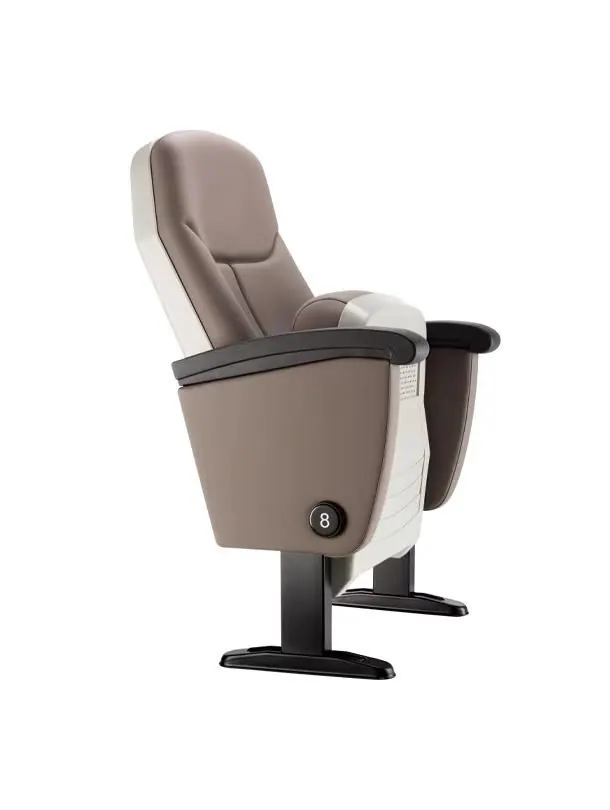
- Line arrayWhen an array is hung, what it does not cover, and why it is tuned with seats in the room.
- SubwoofersPlacement, resonance with steel, and the difference between energy in the room and energy next door.
- Hearing loopCoverage of the accessible seat, metal loss, and why the loop is not added on opening night.